
The Truth Most Dealers Won’t Tell You
A tractor is only as good as the implement behind it.
That’s the reality many farmers discover too late.
The tractor looks powerful.
The implement looks “heavy duty.”
The deal looks cheap.
Then the problems start.
Hydraulic stress.
Wheel slip.
Broken hitch pins.
Poor field performance.
Higher fuel consumption.
And suddenly, the tractor gets blamed.
But here’s the real question:
Was the problem actually the tractor?
Or was it the wrong implement from the beginning?
Let’s break this down properly
The Short Answer
Yes.
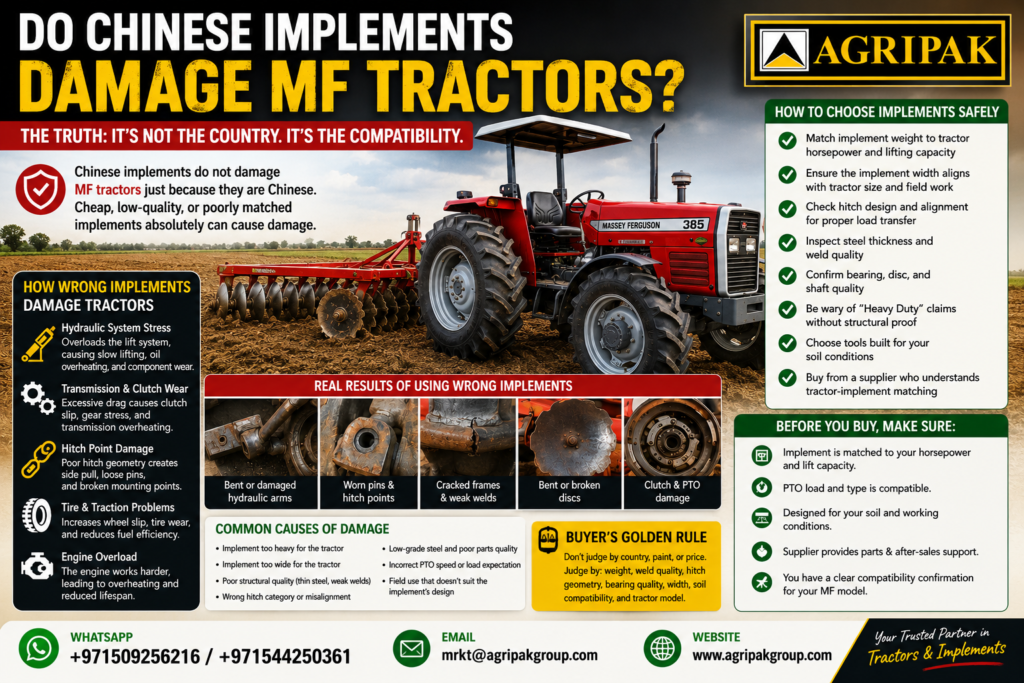
Cheap or poorly matched implements can damage MF tractors.
But the issue is not simply because an implement is “Chinese.”
That part gets misunderstood a lot.
Some Chinese implements perform well.
Some are decent for light farming.
Some are built for completely different soil conditions.
The real danger comes from:
- Poor build quality
- Wrong size
- Excessive weight
- Weak steel
- Bad hitch geometry
- Incorrect PTO load
- Poor compatibility with the tractor
So the real enemy is not nationality.
It’s mismatch.
Why Tractor-Implement Matching Matters So Much
Think about your tractor like a human body.
The engine is the heart.
Hydraulics are the muscles.
Transmission is the backbone.
The implement? That’s the load you carry.
Now imagine carrying a bag that’s too heavy every day.
At first?
You manage.
After some time?
Your back suffers.
Same thing happens with tractors.
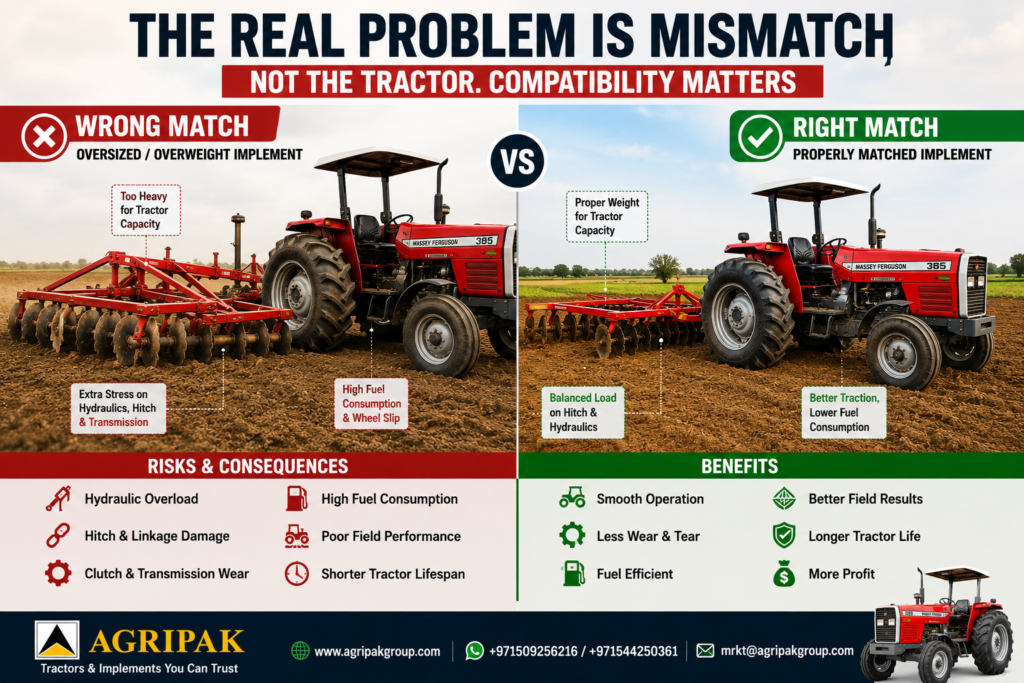
An tractor is designed to work within specific limits:
- Lift capacity
- Draft load
- PTO load
- Weight balance
- Tire traction
- Hydraulic pressure
When an implement exceeds those limits, stress spreads across the entire machine.
Why Tractor-Implement Matching Matters So Much
Think about your tractor like a human body.
The engine is the heart.
Hydraulics are the muscles.
Transmission is the backbone.
The implement? That’s the load you carry.
Now imagine carrying a bag that’s too heavy every day.
At first?
You manage.
After some time?
Your back suffers.
Same thing happens with tractors.
An tractor is designed to work within specific limits:
- Lift capacity
- Draft load
- PTO load
- Weight balance
- Tire traction
- Hydraulic pressure
When an implement exceeds those limits, stress spreads across the entire machine.
The Biggest Mistakes Farmers Make
1. Buying the Cheapest Implement
Cheap can become expensive very fast.
A low-price implement may use:
- Thin steel
- Weak welding
- Low-quality bearings
- Poor disc alignment
- Bad frame geometry
It may survive in soft soil.
But in heavy African field conditions?
That’s where cracks begin.
2. Using an Implement That Is Too Heavy
This is extremely common.
Farmers often think:
“If the tractor can pull it, then it’s fine.”
Not true.
A tractor may move an implement temporarily while still damaging itself internally.
Overweight implements create:
- Hydraulic strain
- Rear axle stress
- Front lifting issues
- Unstable steering
- Hitch deformation
- Faster tire wear
And over time, repair costs start stacking up.
3. Choosing the Wrong Width
Bigger is not always better.
A very wide implement may:
- Reduce turning efficiency
- Increase fuel consumption
- Create uneven field work
- Increase wheel slip
- Overload the tractor continuously
This becomes worse in:
- Wet fields
- Clay soil
- Uneven terrain
- Deep cultivation work
How Poor Implements Damage MF Tractors
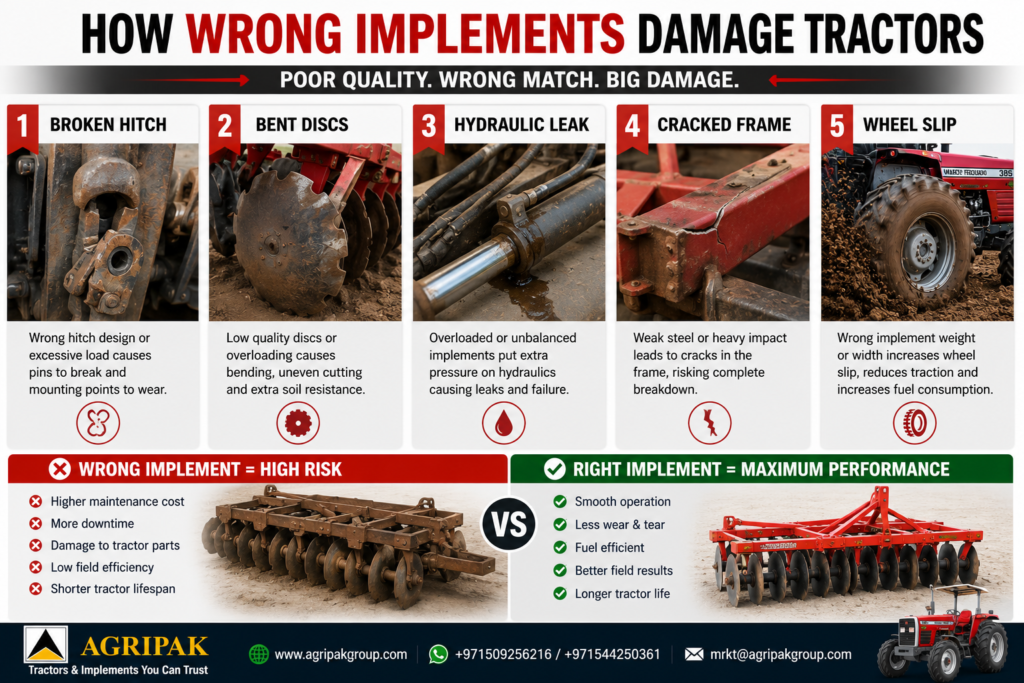
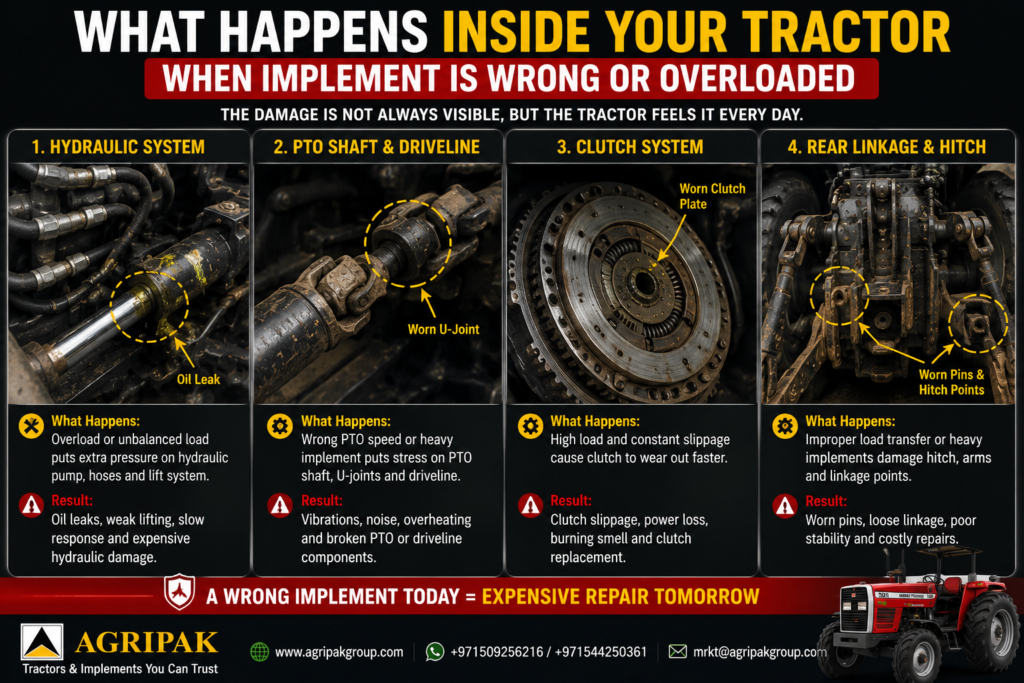
Hydraulic System Stress
Heavy or badly balanced implements overload the lift system.
Common signs:
- Slow lifting
- Jerking hydraulics
- Oil overheating
- Weak lifting power
Over time, seals and hydraulic components wear faster.
When the implement creates excessive drag:
- Clutch slips more
- Gear stress increases
- Transmission heats up
- Driveline strain rises
Especially during deep ploughing.
Hitch Point Damage
Poor hitch geometry is dangerous.
Even if the implement weight seems acceptable, bad alignment creates uneven pulling force.
That leads to:
- Side pull
- Crooked linkage wear
- Loose pins
- Broken mounting points
And once hitch geometry changes, the tractor never feels the same again.
Tire and Traction Problems
A bad implement increases rolling resistance.
Result?
- More wheel spin
- Faster tire wear
- Reduced traction
- Poor fuel efficiency
Farmers often blame the engine.
But the implement is usually the hidden problem.
Real Farm Scenario
Let’s make this practical.
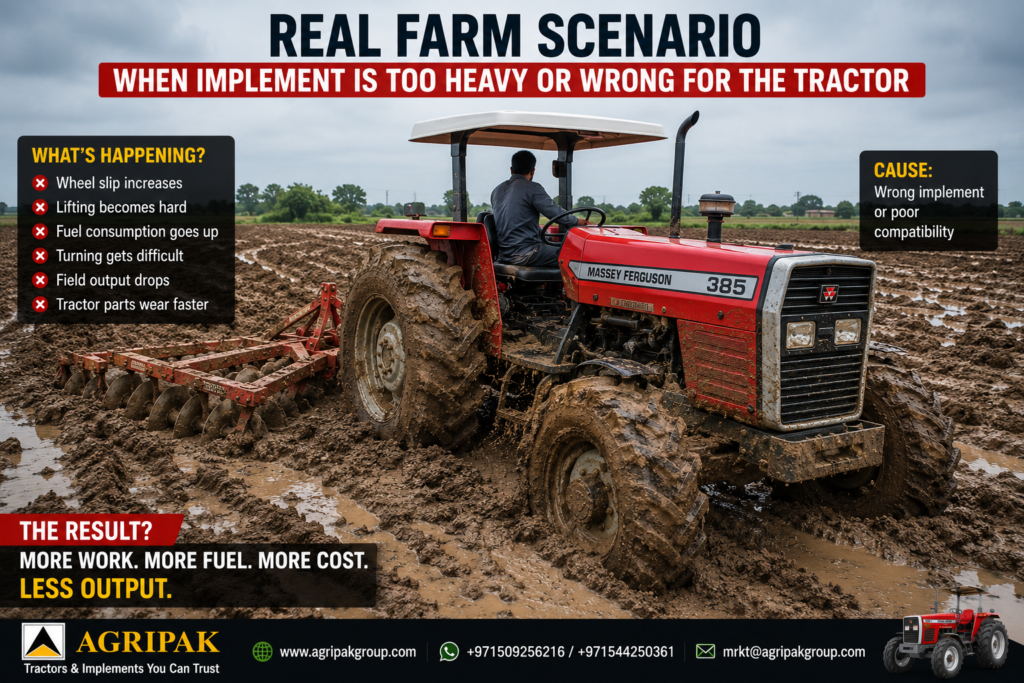
Imagine this setup:
- 75HP MF tractor
- Heavy clay soil
- Wet conditions
- Cheap oversized disc implement
At first, everything looks okay.
Then slowly:
- Steering becomes harder
- Fuel consumption rises
- Hitch pins wear out
- Tractor struggles while lifting
- Wheel slip increases
- Field productivity drops
The farmer thinks:
“This tractor is weak.”
But the tractor wasn’t the issue.
The implement was never properly matched.
Are All Chinese Implements Bad?
No.
That’s an outdated way of thinking.
There are:
- Good Chinese manufacturers
- Average manufacturers
- Poor manufacturers
Just like every country.
The smarter question is:
“Is this implement engineered properly for my tractor and soil condition?”
That’s what actually matters.
What You Should Check Before Buying Any Implement
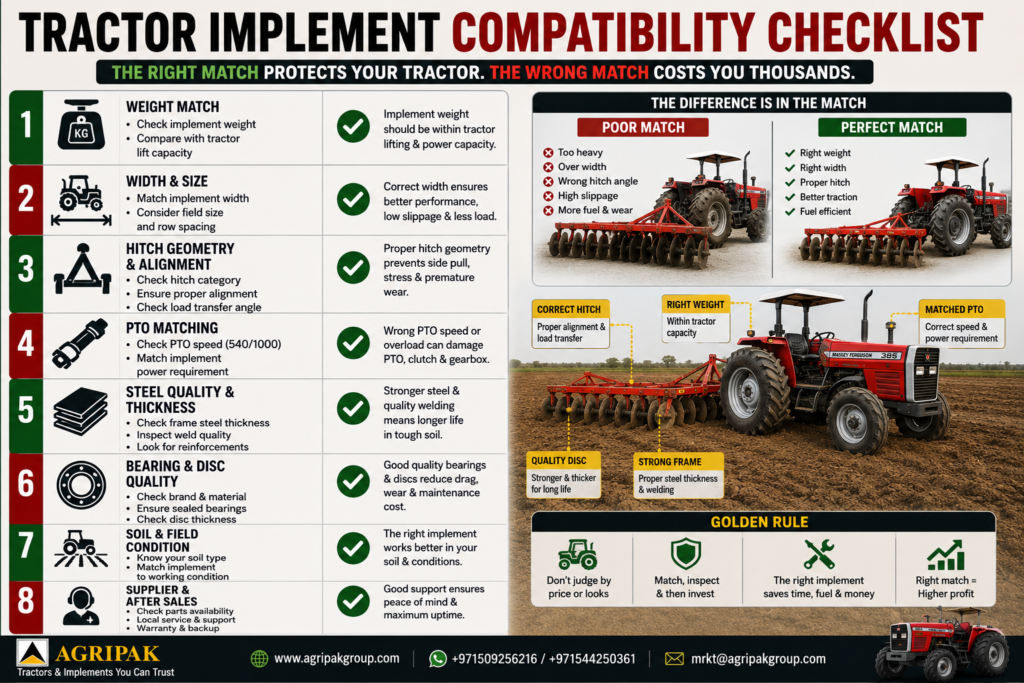
Weight Compatibility
Always compare:
- Tractor lifting capacity
- Implement weight
- Ballast balance
Never guess.
Hitch Geometry
Check:
- Hitch category
- Alignment
- Load transfer angle
Bad geometry creates long-term stress.
Steel Thickness and Welding
Inspect:
- Reinforced areas
- Weld finishing
- Frame strength
- Structural joints
Paint can hide weak steel.
Don’t get fooled by appearance.
Bearing and Disc Quality
Low-quality bearings increase drag.
Thin discs bend faster in hard soil.
This creates extra resistance and unnecessary tractor stress.
PTO Compatibility
Wrong PTO load damages:
- Clutch
- PTO shaft
- Transmission
Always confirm PTO requirements before purchase.
The Smart Buyer Rule
Don’t judge by:
- Country
- Paint color
- Marketing words
- “Heavy duty” stickers
- Cheap price
Judge by:
- Engineering
- Weight balance
- Soil suitability
- Structural quality
- Compatibility
- Supplier knowledge
That’s how professional buyers avoid expensive mistakes.
Best Advice for Farmers and Dealers
Before buying any implement, request a proper compatibility assessment based on:
- Tractor horsepower
- Lift capacity
- Soil type
- Field condition
- Intended application
That small step can save thousands later.
Seriously.
A cheap mismatch today can become a major repair bill tomorrow.
Quick Buyer Checklist
Before purchasing, ask yourself:
✅ Is the implement weight suitable for my tractor?
✅ Is the width correct for my field work?
✅ Is the hitch properly aligned?
✅ Are the welds strong and reinforced?
✅ Are the bearings and discs high quality?
✅ Does the PTO load match my tractor?
✅ Is the implement designed for my soil condition?
✅ Does the supplier truly understand tractor-implement matching?
If the answer is unclear…
Pause the purchase.
Otherwise, the tractor pays the price for shortcuts.
Final Verdict
Do Chinese implements damage MF tractors?
Not because they are Chinese.
But cheap, low-quality, or poorly matched implements absolutely can damage tractors over time.
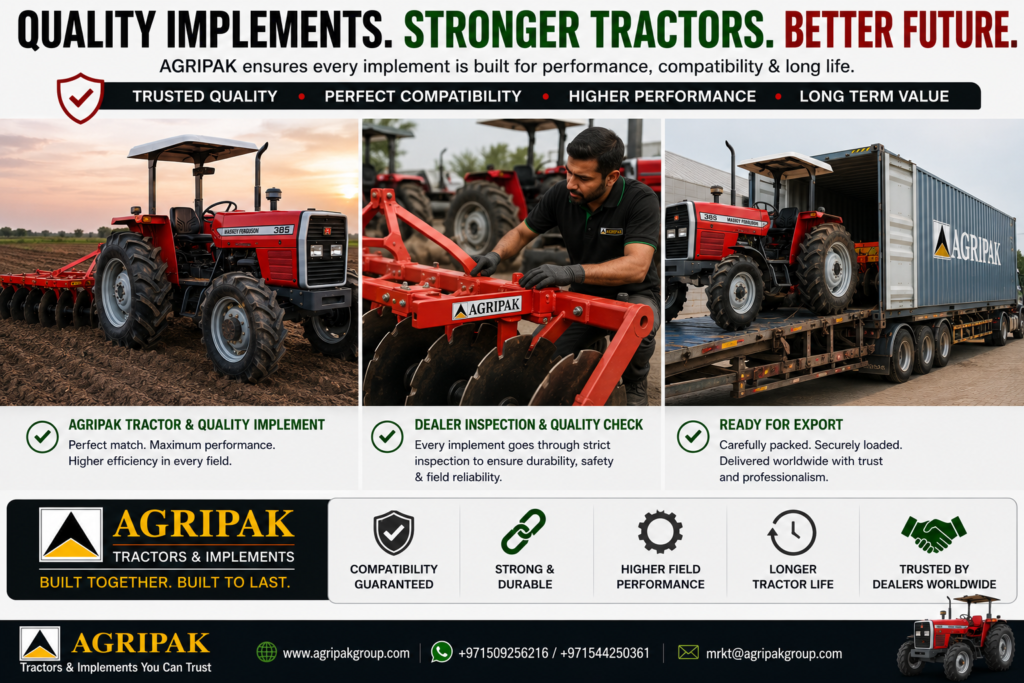
A strong tractor deserves the right partner behind it.